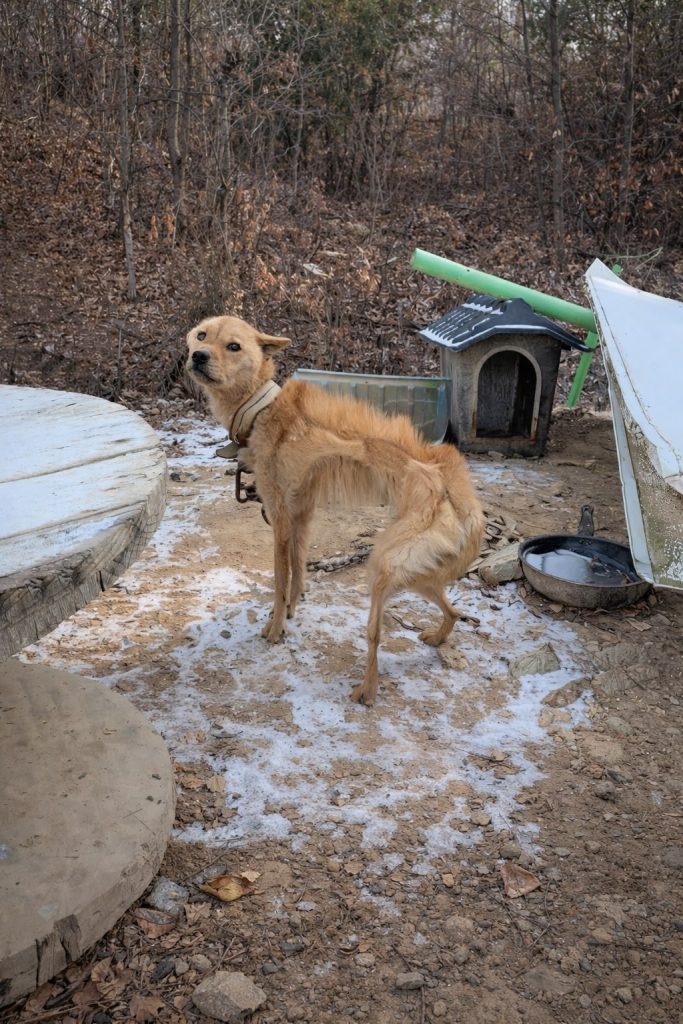
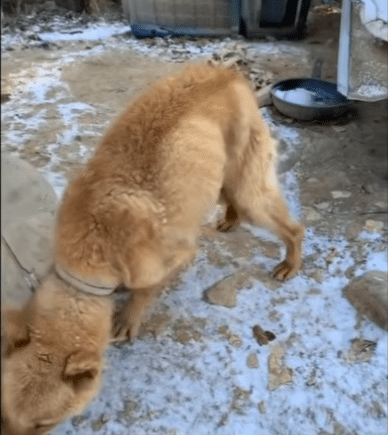
Donghee was discovered during the harshest days of winter, in a place far removed from warmth or safety. Tethered to a rough wooden post, she stood alone against freezing air and frozen ground. Her small body was painfully thin, her fur dull and tangled, her ribs clearly visible beneath it. She watched the empty surroundings with wide, uncertain eyes, as though hoping the person who left her might return. But the days passed quietly, and no one came.
With no shelter to protect her, Donghee endured each night curled tightly against the post, shivering as the cold pressed in. Hunger weakened her further, draining the little strength she had left. She no longer cried out. She simply waited—still, silent, and exhausted—through long nights that offered no comfort.
When rescuers finally reached her, they knew immediately that she had been there far too long. Her movements were slow and careful, her legs unsteady beneath her. Yet she did not try to run or resist. As the team approached, speaking softly, Donghee remained calm, trembling but alert. When the chain was removed, she stayed still, unsure but present, as if sensing that this moment was different.
Wrapped in a warm blanket, Donghee was gently carried away from the cold. For the first time in a long while, she was no longer alone.
VIDEO: From Chains to Comfort – Donghee’s Journey From Winter Despair to a Life Filled With Love
At the shelter, care began immediately. Donghee was bathed carefully, layers of dirt and neglect washed away with warm water and patient hands. Her body felt fragile, every bone pronounced, yet she showed no aggression. She simply watched, quiet and observant, trying to understand this new world around her.
Feeding had to be slow and deliberate. After so much deprivation, her body could only handle small meals given throughout the day. Even so, Donghee ate eagerly, revealing how long she had gone without enough nourishment. Medical checks showed dehydration and digestive strain, but with fluids, gentle treatment, and rest, her body began to respond.
The first few days passed quietly. Donghee slept often, lifting her head only when someone entered the room. She kept her distance, unsure whether trust was something she could afford again. The world had taught her to be cautious.
Then, on the fifth day, something changed. A caregiver reached out a familiar hand. This time, Donghee did not pull away. Slowly, she leaned forward and rested her head gently in that open palm. It was a small gesture, but it marked a turning point. It meant she was ready to believe again.
From that moment on, progress came steadily. Donghee’s strength returned day by day. Her eyes softened. Her coat grew healthier as proper nutrition took hold. Short walks became confident steps. Curiosity replaced fear, and she began to notice the world with quiet interest.
Donghee was no longer just surviving. She was learning how to live.
Her personality emerged gently. She greeted familiar faces with small tail wags and bright eyes. Toys became sources of careful excitement. Her body filled out, her movements grew stronger, and her confidence blossomed with each passing week.

Five months after her rescue, Donghee was almost unrecognizable. The frightened dog once chained in the cold had transformed into a joyful companion. She loved basking in sunlight, stretching comfortably as warmth touched her fur. Walks became adventures, and most importantly, she found what she had always been denied—a real family.
In her new home, Donghee finally had safety, consistency, and love. Her past no longer defined her. Instead, it stood as proof of her strength and resilience.
Donghee’s journey is a quiet reminder of what patience and compassion can achieve. When we choose to notice suffering instead of walking past it, we don’t just save a life—we give it meaning.