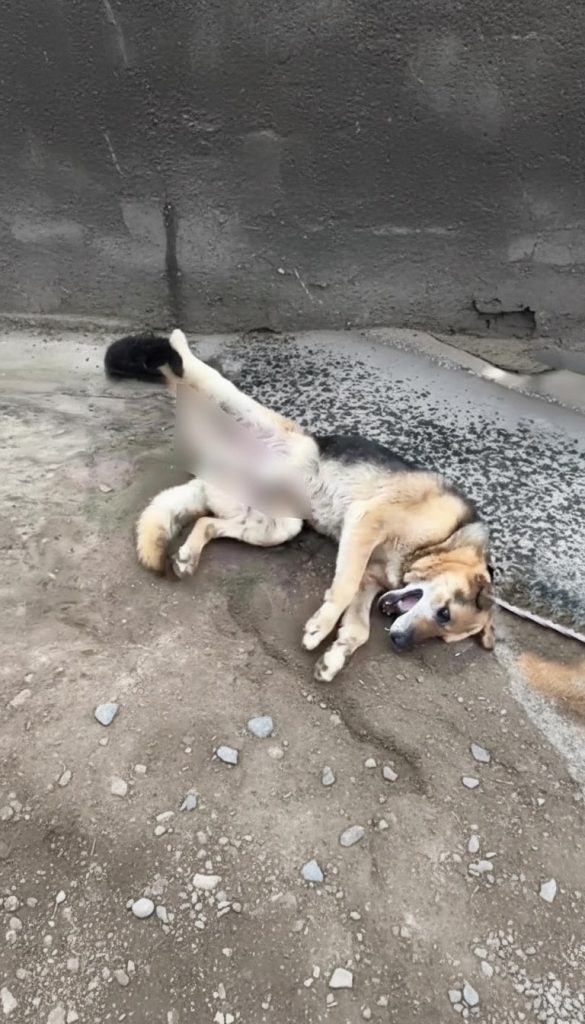
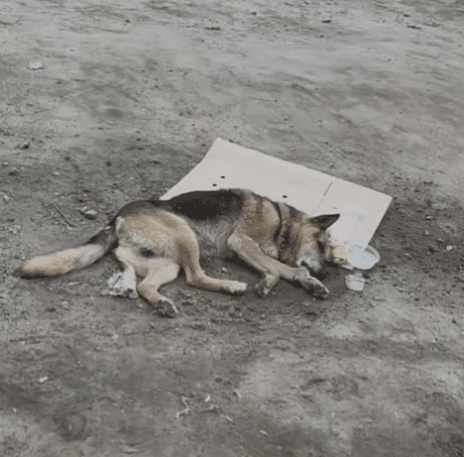
Steven was discovered on a quiet stretch of road, long after the noise of an accident had faded. He lay still, frightened and unable to move, with no understanding of what had happened or what might come next. A passerby noticed him just in time and, shaken by his cries, called for help. It was clear that without immediate care, Steven’s chances were slipping away.
As rescuers learned more, it became apparent that the accident had not been the end of his ordeal. There were signs that he had been moved afterward, confused and terrified. Despite the pain and fear, something in Steven refused to give in. His eyes followed the people who approached him, not with resistance, but with a quiet plea—as if he sensed they were his last chance.
At the veterinary clinic, the extent of Steven’s injuries became clear. He had suffered significant trauma and blood loss, along with fractures that would require careful treatment. There were serious concerns about his ability to walk again. The medical team spoke honestly about the risks ahead. Recovery, if it happened at all, would be slow and uncertain.
Still, the shelter chose hope. They reached out to the person listed as Steven’s owner, believing that support might help him pull through. For a brief moment, it seemed possible. Then the support was withdrawn. In a single decision, Steven was left behind once more.
VIDEO: He Refused to Give Up – How Steven Survived the Unthinkable and Found a Second Chance
The shelter team did not hesitate. They gave him a name—Steven—and with it, a promise. He was no longer an anonymous patient. He was someone worth fighting for. They committed themselves fully, knowing the road ahead would demand patience and care.
Surgery became the only option. It was complex and carried risk, but Steven made it through. Recovery required constant monitoring and gentle handling. When he was stable enough, he was moved into a home environment where healing could continue with consistency and calm.
One of the most meaningful steps in Steven’s recovery came when he was introduced to a custom wheelchair. At first, he was unsure, learning how to move in a new way. But with time, his determination showed through. Slowly, he gained confidence, discovering that movement—and independence—were still possible.
Physical therapy became part of his daily routine. With each session, Steven grew stronger, both physically and emotionally. He began enjoying simple moments again—quiet time outdoors, the feeling of grass beneath his paws, sunlight warming his face. His tail wagged more often. His eyes softened. The dog he had always been started to return.
Weeks passed, and Steven’s transformation continued. He became more social, greeting caregivers with curiosity instead of fear. He learned to trust, even after everything he had endured. Questions about how much mobility he might regain remained, but they no longer defined his life.
The people who cared for Steven became his family. They celebrated every small milestone, knowing each one represented something far greater than physical progress. It was proof that his spirit was still strong.
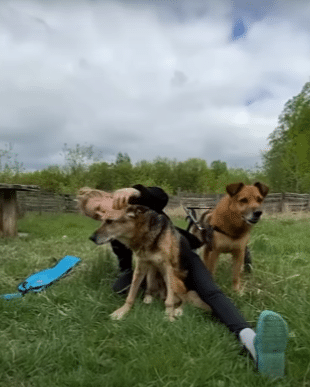
Today, Steven greets each day surrounded by care and understanding. He is not seen as a burden, but as a survivor. His life did not end on that road. Instead, it opened the door to something new—a life shaped by dignity, patience, and second chances.
Steven’s journey reminds us that healing is not only about the body. It is about trust, commitment, and choosing compassion when it matters most. And because someone chose to stay, Steven is still here—living proof that even after the unthinkable, hope can find its way back.