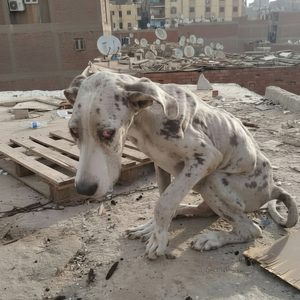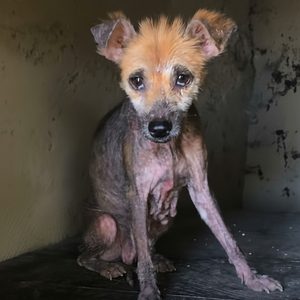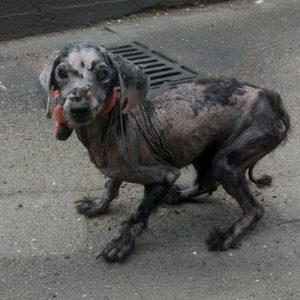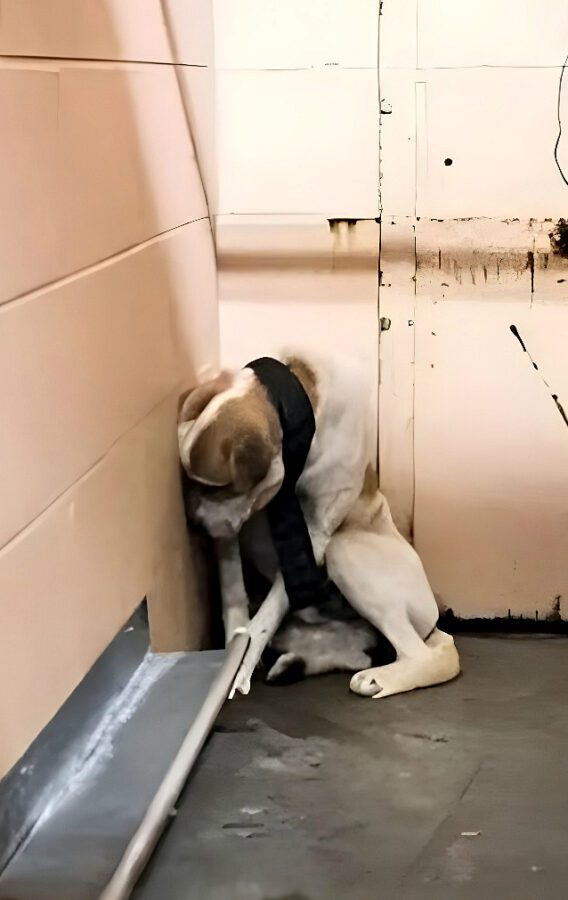
Animal control workers moved through a dense stretch of forest on an otherwise quiet day, never expecting to find a life hanging in the balance. Hidden among the trees was a small dog, barely moving. A heavy leather belt was fastened tightly around his neck, secured with a chain that limited every step. He was alone, exhausted, and frighteningly thin—his body showing the cost of being forgotten.
A Name That Meant More
He was later named Stephen. It was a simple, gentle name, chosen to remind everyone that he was more than what had been done to him. From the beginning, it was clear he had gone without care for a long time. His ribs showed through his coat. His eyes were distant and guarded. Nothing about him suggested comfort or safety—only endurance.
Video: Stephen: A Story of Rescue and Restoration
Fear Learned Over Time
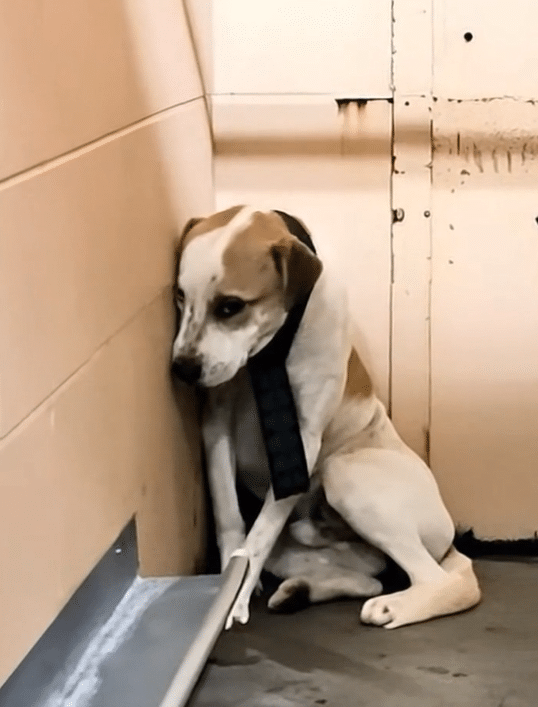
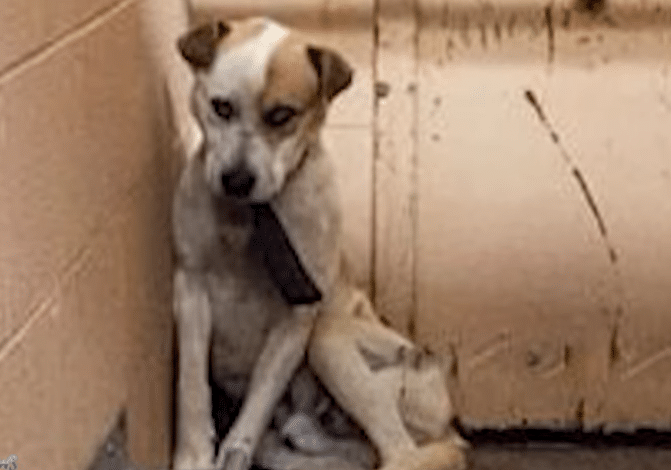
At the shelter, Stephen’s emotional wounds became impossible to miss. He pressed himself into the farthest corner of his enclosure, avoiding eye contact and flinching at movement. Any attempt to come close was met with retreat and quiet warning sounds—not from anger, but fear. These reactions weren’t signs of aggression. They were survival, shaped by restraint and isolation.
Volunteers understood quickly that trust would not come easily. Stephen wasn’t refusing connection—he simply didn’t yet believe it was safe.
A Necessary Decision
The leather belt around Stephen’s neck remained a constant reminder of his past. His fear made it impossible to remove safely while he was awake. After careful discussion, the team chose sedation as the kindest option—allowing veterinarians to examine him without causing further distress.
During the procedure, the veterinary team addressed more than the belt. Stephen was dehydrated, undernourished, and physically depleted. Nutritional support began immediately, with treatment designed to rebuild his strength slowly and safely.
When the belt was finally removed, it felt symbolic to everyone present. It wasn’t just an object coming off—it was the end of a chapter.
The First Signs of Trust
When Stephen woke, something subtle had changed. Without the weight around his neck, he lifted his head and looked around—not with fear, but curiosity. He allowed caregivers to sit nearby without retreating. Then, quietly, his tail moved. Just a little. Enough to stop the room.
From there, progress came in small steps. He began eating regularly. His body grew stronger. Volunteers approached slowly, speaking softly, letting him decide when closeness felt safe. Over time, his posture softened. His eyes brightened. The corner he once hid in no longer defined his world.
Healing Without Rush
Recovery was not instant. Loud sounds still startled him. New situations made him pause. But surrounded by patience and consistency, Stephen learned that safety could be predictable. He learned routines. He learned rest. Most importantly, he learned that he mattered.
One rescuer later said it felt like watching a door quietly open—the day the belt came off and healing truly began.
A Future Built on Kindness
Stephen’s journey reminds us that recovery is rarely dramatic. It’s built through calm mornings, gentle voices, and people who refuse to give up. With steady care from volunteers and veterinarians, he was given something he had never known before: the chance to feel safe.
Today, Stephen continues moving forward—stronger in body and spirit. His story proves that even deeply broken trust can be rebuilt. With patience, understanding, and compassion, wounds—both seen and unseen—can heal.
Sometimes, hope begins with one simple act of kindness.