The call came late in the evening.
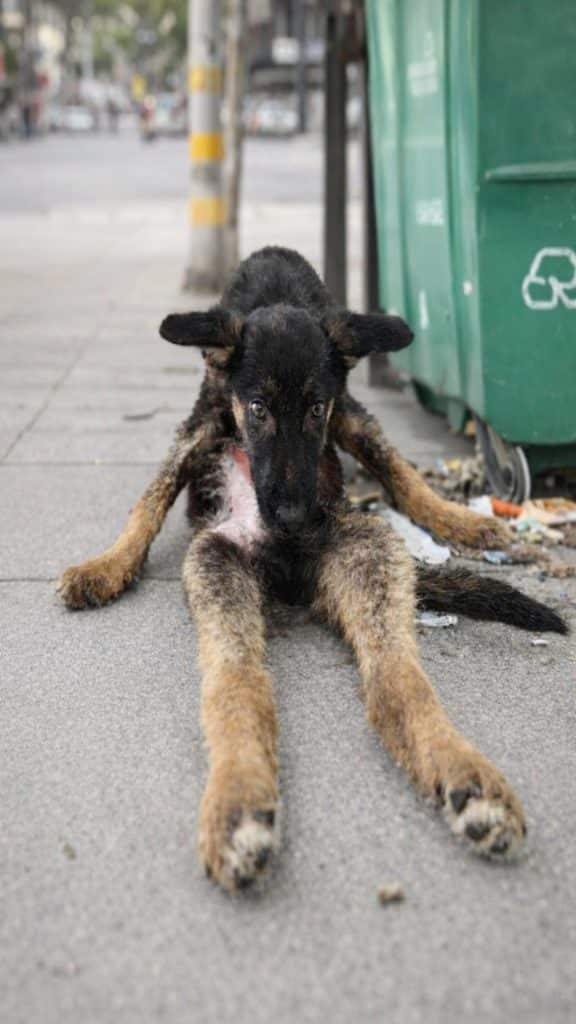
A small puppy had been seen sitting beside a trash can, alone and unmoving. The street was quiet, the kind of quiet that makes everything feel heavier. No one knew how long the puppy had been there, only that it hadn’t left.
When rescuers arrived, the puppy was still in the same spot.
Too small to be facing the world alone, it sat stiffly, its body held in an unnatural posture. Its eyes were wide and alert, filled with fear—but also with something else. It wasn’t giving up. It was waiting.
When Help Finally Came Close
As rescuers approached, it became clear the puppy wasn’t choosing to stay still.
Its body resisted movement, not out of aggression, but because moving had become uncomfortable. Even so, the puppy didn’t pull away from gentle hands. It simply looked up, quiet and watchful, as if hoping this moment might be different from the ones before it.
That hope was enough.
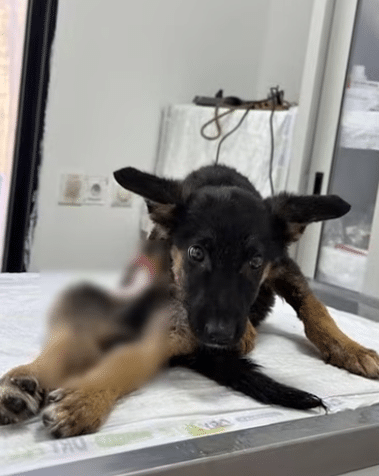
The puppy was carefully lifted and taken to a veterinary clinic, where answers began to emerge.
Video: From Pain to Play—A Puppy’s Quiet Transformation
Understanding a Body That Had Never Been Free
Examinations revealed that the puppy had spent far too much time confined in tight spaces.
Unable to stretch or move freely, its body had adapted to restriction instead of growth. This kind of neglect leaves more than physical marks—it shapes how a young life learns to exist.
Yet even then, the puppy responded to care. It was alert. It listened. It watched closely. Trust, though fragile, was still there.
Healing That Took Time, Not Force
Recovery did not happen overnight.
The veterinary team focused on restoring comfort and mobility, while caregivers concentrated on something just as important—safety. Gentle voices, slow movements, and predictable routines became part of each day.
At first, progress was barely visible.
Then, small changes appeared. The puppy shifted positions on its own. It responded to touch with curiosity instead of tension. A soft tail wag here. A hesitant nudge there.
Each moment mattered. Each step forward meant the puppy was learning something new—how to relax.
Discovering What It Meant to Be a Puppy
As strength returned, so did personality.
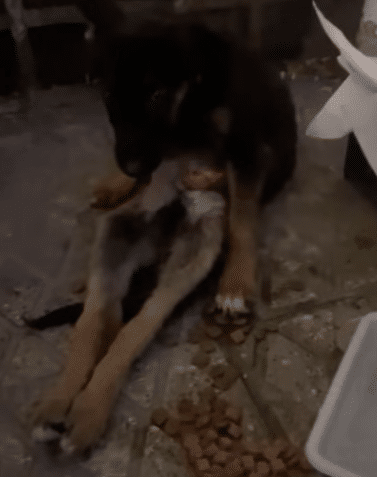
The puppy began exploring its surroundings, first cautiously, then with growing confidence. Toys became interesting. Sunshine felt good. The presence of other dogs sparked curiosity instead of fear.
Slowly, stiffness gave way to movement.
Awkward steps turned playful. Stillness turned into motion. Watching it happen felt almost unreal—like seeing a life restart from the beginning.
More Than a Physical Change
The most remarkable transformation wasn’t just in the puppy’s body.
Emotionally, it bloomed. It learned that hands could comfort. That voices could soothe. That the world, once small and frightening, could be gentle.
Trust returned not all at once, but steadily—built through patience and consistency.
A Life Redefined by Kindness
Today, the puppy lives in a home where it is cherished.
It runs, plays, rests easily, and greets each day with excitement. Its past no longer defines it.
What defines it now is joy.
This journey—from a lonely night beside a trash can to days filled with play—shows what compassion can do when it arrives at the right moment. Sometimes, changing a life doesn’t require grand gestures.
Just noticing.
Just staying.
Just giving a small, fragile life the chance it always deserved.